
Ever Studied for Hours but Still Forgotten Everything?
Imagine sitting at your desk the night before an exam. Your book is open, your notes are everywhere, and you keep rereading the same paragraph.You have spent two hours studying, but when you close the book, you struggle to explain what you just read.Frustrating, right?Many students experience this problem. Spending more time studying does not automatically mean you are learning more. How you study matters, too.The good news? You do not need a perfect timetable or hours of motivation. A few simple changes can help you use your study time more effectively.Let’s look at five practical habits you can start using today.

1. Stop Rereading Start Testing Yourself.
Reading a chapter again and again can make information feel familiar. But can you remember it without looking?Try active recall: study a topic, close your book, and explain what you remember
A relatable example:
You revise five biology definitions. Instead of reading them for the fourth time, cover your notes and write the definitions from memory. Check your answers and revisit anything you missed.This helps you identify gaps in your knowledge.
Try this After every study session, write down three things you remember and one thing you still need to understand.Research reviews have identified practice testing and distributed practice as particularly useful learning techniques.

2. Use the 10-Minute Rule to Beat Procrastination
Have you ever delayed an assignment because it looked too difficult to start?Instead of promising yourself that you will finish everything tonight, commit to just ten minutes.
A relatable example:
You need to write an essay but feel stuck. Open a document, write a rough introduction, and list three points you want to discuss. You have turned a vague task into a concrete first step.You do not have to finish the essay in ten minutes. You just need to begin.
Try this:Choose one task, set a ten-minute timer, and put your phone aside until the timer ends.

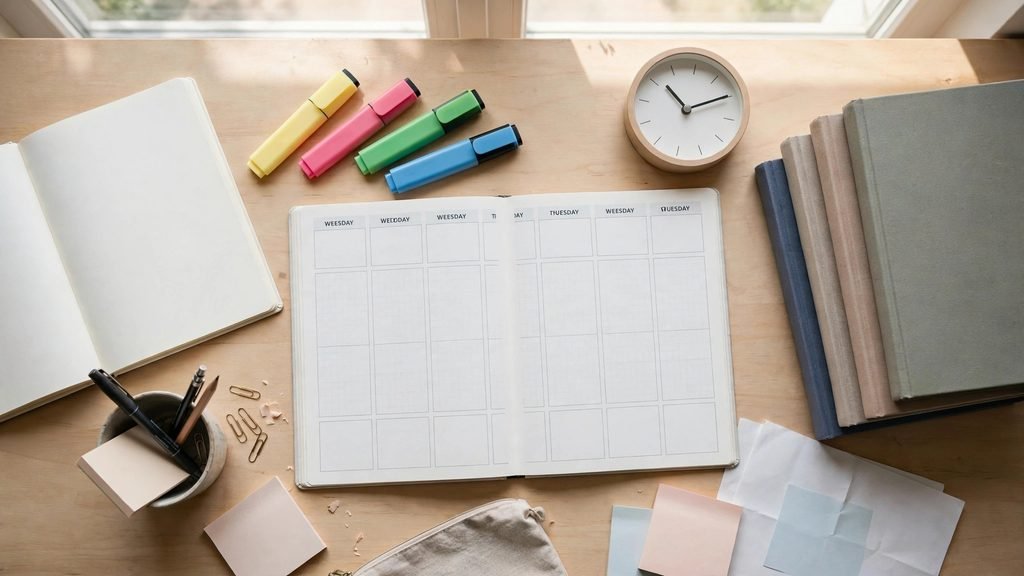
3. Make a Timetable You Can Actually Follow:
A timetable that gives you six hours of studying after a full day of classes may look impressive, but is it realistic?A useful plan fits your actual responsibilities, energy, and available time.
A relatable example: You arrive home from college at 4 PM and have homework to complete. Instead of planning to study every subject for two hours, schedule 25 minutes for mathematics, a short break, and 25 minutes for science. Adjust the remaining tasks around your real commitments.A smaller plan you can follow is often more useful than an ambitious plan you abandon.
Try this: Every evening, write down your three most important tasks for the following day.
4. Protect Your Focus from Your Phone:
You sit down to solve maths questions. A notification appears. You check one message, then another, and suddenly your study session has disappeared.This is a familiar challenge for students who keep their phones within reach.
A relatable example: You have 20 practice questions to solve. You place your phone in another room and work for 25 minutes without notifications. When the session ends, you take a short break.The goal is not to give up your phone. It is to create time when your attention belongs to your work.
Try this: Silence non-essential notifications and keep your phone out of reach during one focused study session today.

5. Review Your Progress Instead of Blaming Yourself:
Some weeks go smoothly. Others do not.You may miss a study session, underestimate an assignment, or spend too much time on a difficult chapter. That does not mean you have failed.
A relatable example: You planned five study sessions but completed only three because two college assignments took longer than expected. Instead of repeating the same schedule, shorten your sessions on busy days and leave extra time for unfinished tasks.A plan should adapt when life changes.
Try this: At the end of each week, ask yourself:
• What did I complete?
• What was difficult?
• What is one change I can make next week?
A Simple Study Routine You Can Try Today
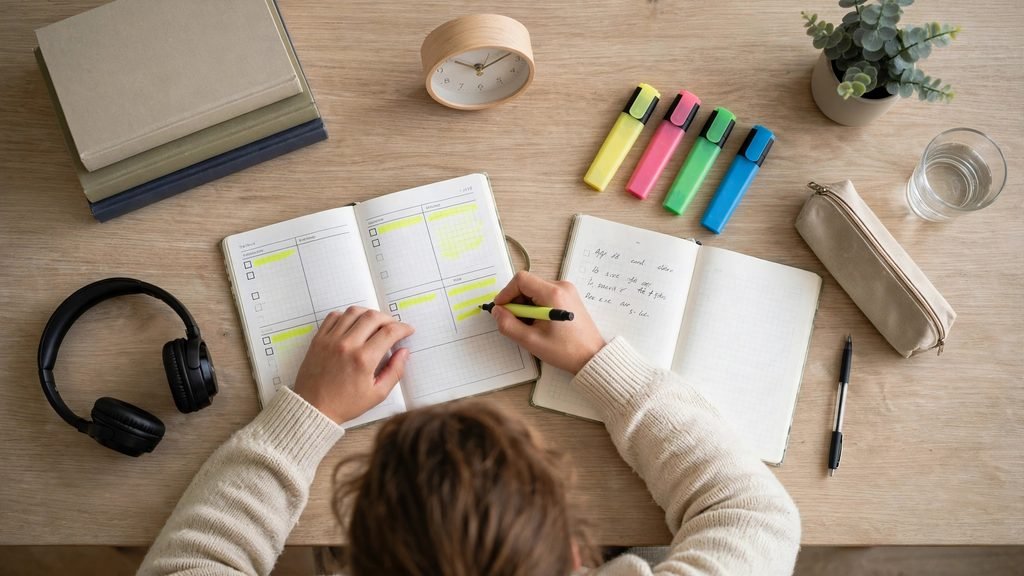
You do not need to change your whole life in one day. Start with a manageable routine.
| Time | Activity |
| 25 minutes | Study one time |
| Take a short break | |
| 25 minutes | practise questions |
| 5 minutes | Take another break |
| 10 minutes | Test your memory |
Adjust the timings to suit your needs. This is a sample routine, not a rule everyone must follow.
How Can a Study Planner Help?
When assignments, exams, and personal responsibilities compete for your attention, keeping everything in your head can become difficult.A study planner can help you organize deadlines, choose daily priorities, schedule revision sessions, and track completed tasks.
At QSplate, our goal is to make learning more organized with simple tools for smarter learning. A student success bundle or study planner can give you one place to organize your goals, study habits, and assignments.Choose a tool that fits your routine and use it consistently.
Frequently Asked Questions
What is the best way to study smarter?
Use active recall, practise questions, spread revision over time, set clear goals, and reduce distractions. Choose techniques that help you remember and apply what you learn.
How can I stop procrastinating on studying?
Start with a small task that takes around ten minutes. Breaking a large assignment into smaller actions can make it easier to begin.
How long should a student study at a time?
It depends on the student and the task. Try short focused sessions with breaks and adjust the length based on your concentration and workload.
Is a study planner useful?
A study planner can help you manage deadlines, organize revision, and track progress. It works best when its schedule is realistic and easy to maintain.
Final Thoughts
You do not need to become a perfect student overnight.Start with one topic, one focused session, or one small improvement to your routine. Review what works, adjust what does not, and keep moving forward.
Study smarter. Start small. Keep improving.QSplate Simple Tools for Smarter Learning.